Career and Technical Education (CTE)
EVIT Misinformation Clarification
EVIT Transportation Update Letter
Dear QCUSD Families,
As we continue planning for the 2026–2027 school year, we want to provide an update regarding our partnership with the East Valley Institute of Technology (EVIT). QCUSD is aware that recent misleading communication from EVIT leadership regarding transportation funding has created confusion and does not provide families with the full picture.
Our position through this process has remained focused on one thing: making sure the funding generated by QCUSD students stays connected to QCUSD students, classrooms, teachers, and CTE opportunities.
For the past 18 months, QCUSD and eight other East Valley districts have worked in good faith to reach an agreement with EVIT. During that time, districts made multiple compromises in an effort to protect opportunities for students. Unfortunately, EVIT has not been willing to reach a reasonable agreement that prioritizes students and supports a sustainable partnership.
Because of EVIT’s unwillingness to put students first, QCUSD is facing significant budget impacts related to the partnership. As a result, district-provided transportation to EVIT may no longer be available next school year. Students who choose to attend EVIT may need to provide their own transportation or explore one of the many CTE programs offered within QCUSD.
We understand this may be an inconvenience for families and students. Our priority remains ensuring every student continues to have access to strong career and technical education pathways that support their future goals. We want to clarify the student opportunities that exist for the 2026–2027 school year if your student is unable to drive to EVIT.`
Our high schools continue to offer a wide variety of high-quality CTE pathways and programs designed to prepare students for college, careers, certifications, and real-world experiences right here within our district. You can access a comprehensive list elsewhere on this page.
We encourage students and families to explore the many outstanding opportunities available across QCUSD schools and find the pathway that best fits their interests and goals.
If your student is enrolled in or plans to attend EVIT, and currently relies on bus transportation, you will need to connect with your school counselor as soon as possible to discuss scheduling options and ensure your student remains on track for graduation and future career goals.
Crismon High School Counselors
Queen Creek High School Counselors
Eastmark High School Counselors
We will continue to keep families informed as conversations with EVIT progress and additional information becomes available.
QCUSD Statement on Transportation
The nine districts are calling out EVIT superintendent Chad Wilson for spreading misinformation and attempting to unnecessarily scare families and students about the future of Career and Technical Education programs.
The districts have consistently supported CTE programs and have continued to fully fund and operate classes on their own campuses throughout this dispute, while EVIT retained millions of dollars due to the nine districts. At no point have the districts sought to eliminate student opportunities or dismantle EVIT. Instead, the districts have fought to protect students, local classrooms, and taxpayer dollars intended for instruction.
The districts believe EVIT has acted as a bad actor throughout this process by refusing to provide meaningful financial transparency while simultaneously demanding more control and more money from local districts. EVIT sought to retain significantly more funding generated by students attending classes on district campuses, diverting dollars away from teachers, equipment, labs, and on-campus instruction to support increased administrative costs at EVIT.
The lack of a contract between the nine districts and EVIT, a result of EVIT’s refusal to collaborate, has created a situation where the districts have no choice but to look for options that provide the best educational opportunities for every child, in every school.
Clarification of Miscommunication
EVIT Claim: Districts are choosing not to transport students.
District’s Position: Transportation is not a normal part of CTE systems across Arizona, and EVIT board members do not have authority over local district transportation decisions. Districts cannot pull millions away from classrooms and local programs to backfill transportation costs while EVIT retains funding that should cover those costs.
Without a new IGA, EVIT retains 100% of state CTE funding for students attending Main and Power campuses, while districts receive 0% for those students. For satellite programs run on district campuses, districts already carry the costs for teachers, equipment, labs, maintenance, and operations.
EVIT Claim: EVIT’s proposal is reasonable.
District’s Position: EVIT attempted to increase its share of state funding from roughly 13% to as much as 30%. This is funding created by district students on district campuses not attending EVIT, without clearly explaining the need for, or use of the additional costs or services.
EVIT Claim: Districts are withholding cooperation.
District’s Position: Districts repeatedly requested mediation and financial transparency for more than a year, and EVIT refused until ordered into mediation by the court.
EVIT Claim: Districts simply do not want to support EVIT.
District’s Position: Districts continue supporting EVIT credits for graduation and remain committed to student access to CTE opportunities. At this time, their concern is protecting local classrooms, local control, and ensuring student-generated dollars stay with students. Evidence of their commitment, throughout the last school year, as EVIT retained the districts’ share of state funding, the nine districts carried the full cost to ensure their students saw no interruption in CTE programming.
EVIT Claim: Districts can just use local funding for transportation.
District’s Position: Funding for transportation is not included in state funding for CTE. Districts have provided that out of their support for all students argue that would force them to divert money away from classroom instruction, equipment replacement, staffing, and student programs on their own campuses while EVIT already receives direct state funding for Main and Power campus students.
EVIT Claim: EVIT is simply trying to grow programs.
District’s Position: Based on the limited information provided by EVIT, it is seeking broader control over local district programs, including influence over what programs districts may offer, how funding is distributed, and how local funds are spent.
EVIT Claim: EVIT can legally retain the funding.
District’s Position: In May 2026, the Court ruled EVIT cannot retain funding unless it directly supports district satellite programs or provides services to those programs.
EVIT Claim: Districts caused the conflict.
District’s Position: Districts say the lawsuit was filed after EVIT refused mediation, sought to sharply increase retained funding, and allegedly held approximately $8 million owed to districts while districts continued paying full operating costs for local CTE programs.
EVIT Claim: Districts are not investing in CTE.
District’s Position: Districts’ funding supports welding equipment, engineering and biomedical sciences programs, ventilation systems, refrigeration replacement, computer labs, buses, faculty contracts, and emergency equipment replacement planning.
EVIT Funding FAQ
Questions & Answers for Families Regarding EVIT Funding
Why is QCUSD speaking out about EVIT funding changes?
QCUSD believes there has been significant misinformation shared regarding EVIT’s proposed changes to Career and Technical Education (CTE) funding and oversight. Our goal is to ensure families have clear, factual information about how these changes could directly impact students, classrooms, transportation, and local career training opportunities.
QCUSD remains committed to transparency, protecting student opportunities, and keeping high-quality CTE programs accessible for our families.
Understanding the Funding
How does CTE funding currently work?
There are two different types of CTE programs connected to EVIT:
- EVIT Main & Power Campuses
- For students attending EVIT’s Main or Power campuses:
- EVIT receives 100% of the state CTE funding for those students.
- QCUSD receives $0 for those students.
- For students attending EVIT’s Main or Power campuses:
- QCUSD Satellite Programs
- Satellite programs are CTE programs taught directly on QCUSD campuses by QCUSD teachers for QCUSD students.
Currently:- QCUSD receives approximately 87% of the funding tied to those students and programs.
- EVIT retains approximately 13% of the funding generated by QCUSD students, even though those students may never step foot on an EVIT campus.
- QCUSD uses its portion of funding to directly support:
- Teachers and staffing
- Classroom equipment
- Technology and software
- Safety equipment
- Program maintenance and upgrades
- Student learning opportunities
- Satellite programs are CTE programs taught directly on QCUSD campuses by QCUSD teachers for QCUSD students.
Why is the 13% retention concerning?
QCUSD believes families deserve to understand that EVIT currently retains funding generated by QCUSD students who are:
- Taught by QCUSD staff
- Educated in QCUSD classrooms
- Using QCUSD equipment and facilities
- Supported through QCUSD operational costs
The district has requested greater transparency regarding how those retained funds are being used to directly benefit satellite students.
Transportation Questions
Who currently pays to transport students to EVIT?
QCUSD has historically absorbed transportation costs for students attending EVIT Main and Power campuses directly from the district’s budget.
This means:
- EVIT receives 100% of the state funding tied to those students.
- QCUSD still carries the financial responsibility for transporting students to those campuses.
Transportation costs include:
- Buses
- Drivers
- Fuel
- Maintenance
- Operational staffing
QCUSD transportation expenses are not separately funded back to the district, creating additional financial pressure on local schools and programs.
Why is transportation part of this discussion?
QCUSD believes it is important for families to understand the full financial picture.
QCUSD does not receive funding from EVIT to transport students to EVIT campuses. For years, QCUSD has absorbed those transportation costs, including buses, drivers, fuel, maintenance, and operations, directly from the district budget, while EVIT receives 100% of the state CTE funding for those students. At the same time, satellite funding generated by QCUSD students is designated to support programs on QCUSD campuses, including classrooms, staffing, equipment, and student opportunities. If EVIT moves forward with retaining more of that satellite funding, QCUSD would need to prioritize its available financial resources to sustain and protect our district programs.
As a result, the district would no longer have the fiscal capacity to continue providing transportation services on behalf of another organization while also maintaining strong on-campus programming opportunities for QCUSD students.
Proposed EVIT Changes
What changes is EVIT proposing?
EVIT is proposing:
- Increasing the amount of funding EVIT retains from satellite programs
- Expanding oversight and control over district-operated CTE programs
- Reducing local district authority over programs hosted on their own campuses
QCUSD believes these proposals could shift more control and funding away from local schools and classrooms.
Why does QCUSD believe local control matters?
QCUSD believes local districts best understand the needs of their students, families, and workforce community.
Maintaining local control helps ensure:
- Programs align with community needs
- Funding goes directly into classrooms
- Students have access to nearby opportunities
- Schools can respond quickly to workforce demands
- Resources remain focused on student success
Student Impact
Could students lose opportunities?
QCUSD’s priority is protecting student access to strong CTE opportunities.
The district believes reduced local funding could impact:
- Equipment upgrades
- Program growth
- Classroom resources
- Staffing support
- Future expansion opportunities
However, QCUSD remains committed to continuing and strengthening CTE opportunities for students.
Will QCUSD continue offering CTE programs?
Yes, QCUSD remains committed to:
- Investing in on-campus CTE programs
- Expanding career pathways
- Supporting student workforce readiness
- Exploring alternative partnerships if necessary
- Protecting local student opportunities
The district continues to advocate for solutions that prioritize students first.
Efforts Toward Resolution
What is QCUSD asking for?
QCUSD has repeatedly requested:
- Financial Transparency
A clear accounting of:- How retained satellite funding is being used
- Why additional funding is being requested from districts
- How proposed changes directly benefit students
- Collaboration & Mediation
QCUSD and other East Valley districts have requested collaborative discussions and mediation to find a fair solution that protects students and classrooms.
What is QCUSD’s message to families?
QCUSD wants families to know:
- Students remain the top priority. The district is fighting to protect local CTE programs and opportunities.
- QCUSD believes funding generated by QCUSD students should primarily support QCUSD classrooms and students.
- The district will continue advocating for fairness, transparency, and student-focused solutions.
QCUSD will continue providing updates as discussions progress.
CTE Programs
In Arizona, career and technical education (CTE) prepares students for success in today’s competitive workforce. These programs engage learners in meaningful experiences that lead to purposeful and rewarding careers.
Students in CTE can:
-
Earn industry certifications that give them a competitive edge.
-
Participate in career and technical student organizations (CTSOs) to build leadership skills and showcase their talents in state and national competitions.
As an essential part of a well-rounded education, CTE programs are also eligible for Title IV funding. Explore the CTE programs offered at each of our high schools and see how students are preparing for their future today
CTE Student and Staff Success in QCUSD
- 460 QCUSD students earned industry credits in the 2024–2025 school year.
- 78 percent of QCUSD students who completed a CTE program went on to college or postsecondary school.
- 89 percent of QCUSD students who completed a CTE program earned at least one industry-recognized credential.
- About 2,600 QCUSD high school students are enrolled in a CTE program.
- QCUSD has 35 CTE satellite programs across QCHS, EHS, and CHS.
- The Queen Creek FFA has been ranked a Gold Chapter among the top eight FFA programs in the state for consecutive years, 2019–2024, and has also been ranked on the national level.
- In 2024–2025, all 115 agriscience students had a work-based learning project, contributing 4,961 hours to their projects.
- FCCLA Early Childhood at QCHS was ranked a Gold Chapter at the State Leadership Conference.
- QCHS’s Ms. Kim Rutherford was named Arizona FCCLA Advisor of the Year.
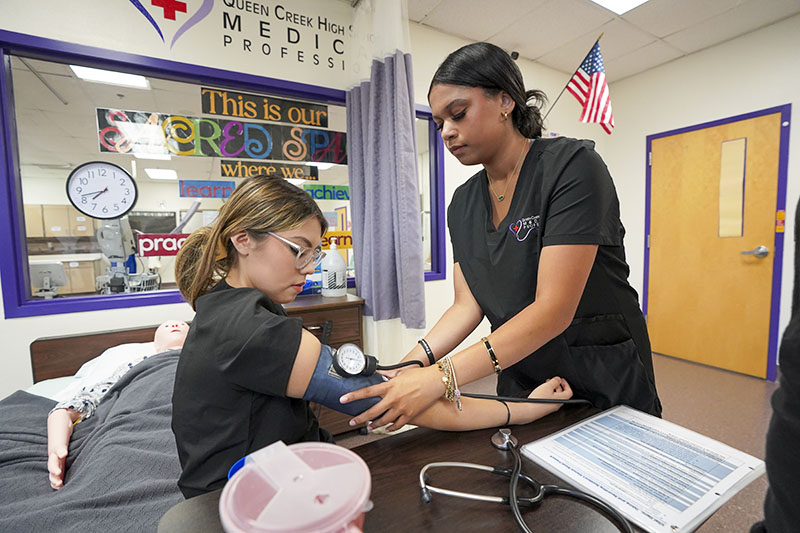
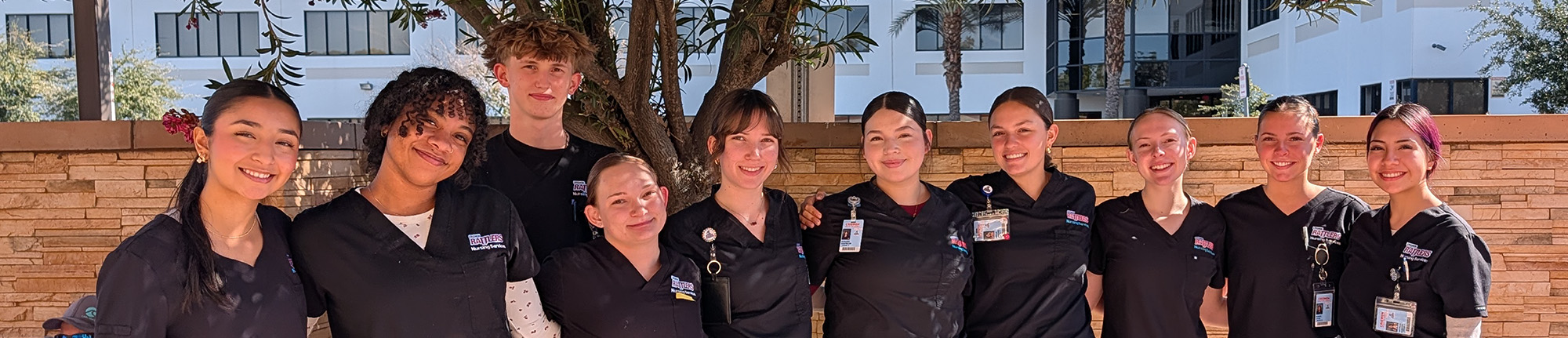
- EHS nursing student Chidera O. placed first at the State Nursing Assisting event.
- EHS nursing students Ashley K. and Nina D. R. placed second for Career Display Board.
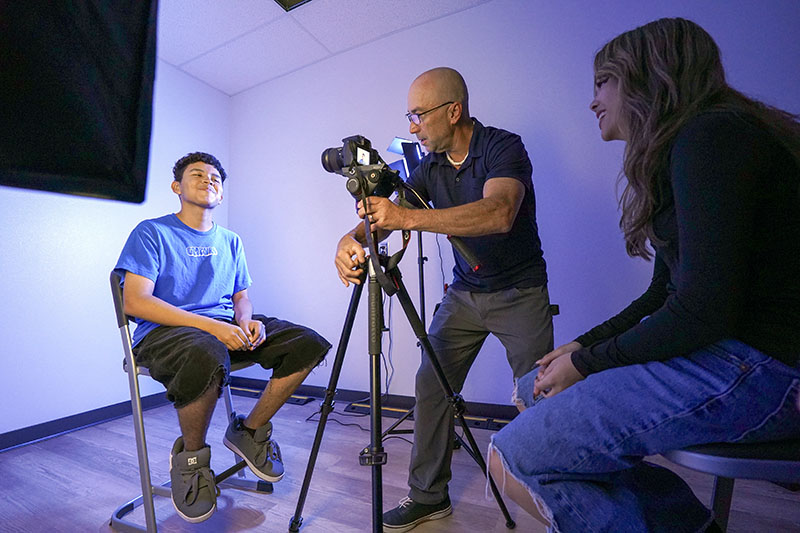
- QCHS Film/TV has achieved a 100 percent pass rate on the film TSA exam for the past three years.
- CHS at HOSA internationals received first and third place in Clinical Nursing.
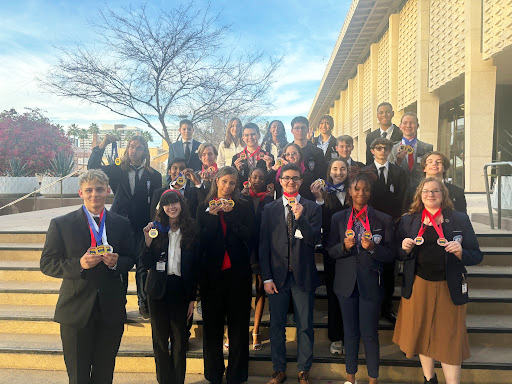
- CHS FBLA competed at Arizona State University with 24 students and was awarded 35 medals.